When you’re dealing with a traumatic scene, one of the first questions that comes up is timing. You need to know when the property will be safe and usable again, especially if it’s your home or business. The reality is that every scene is different, and anyone giving you an exact timeframe over the phone without seeing the situation is probably not being straight with you.
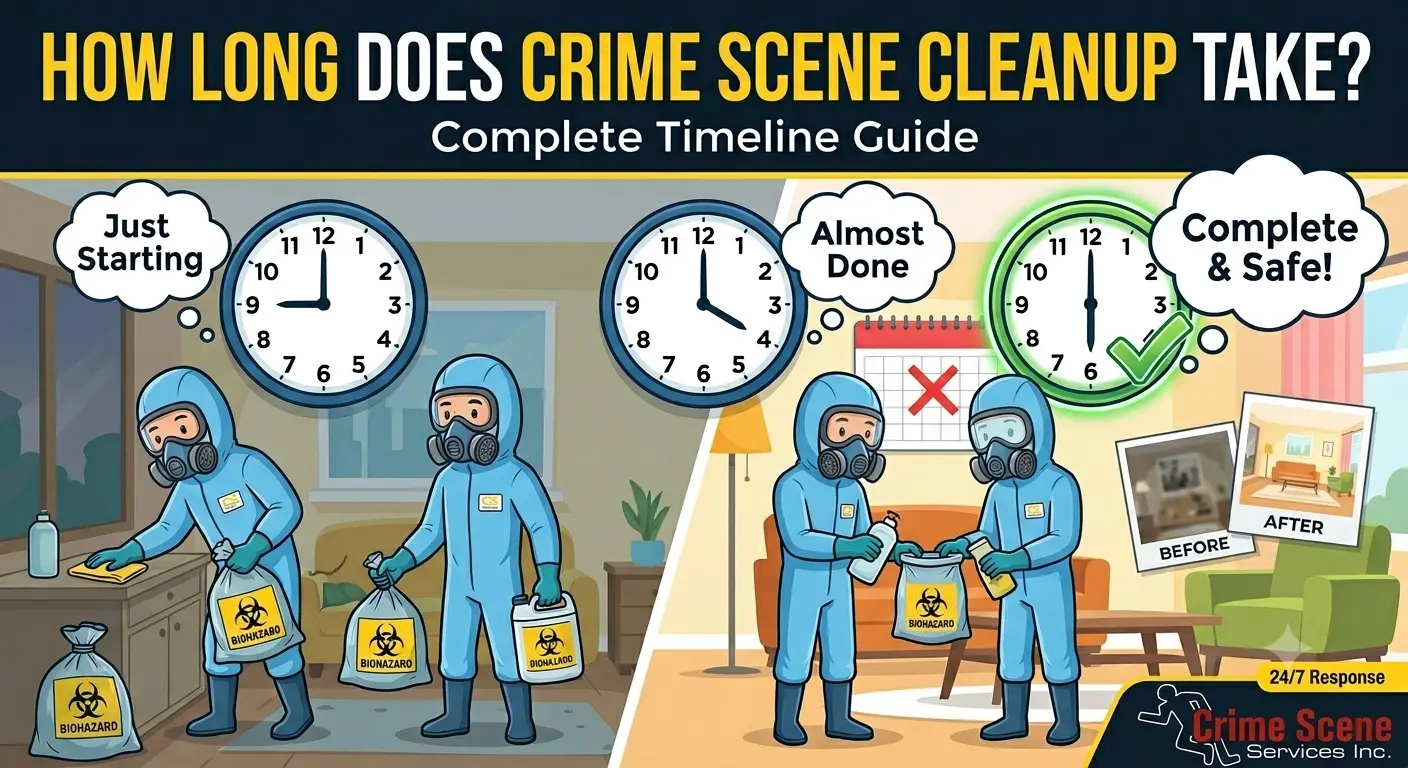
After 30 years in this business, I can tell you that most residential crime scenes take 4-8 hours to properly clean and decontaminate, while larger or more complex scenes can stretch into multiple days. Here’s what actually determines how long your cleanup will take.
Crime Scene Cleanup Timeline by Scene Type
| Scene Type | Typical Duration | Factors That Add Time |
|---|---|---|
| Small residential incident | 4-6 hours | Porous surfaces, carpet, multiple rooms |
| Standard home scene | 6-8 hours | HVAC contamination, structural damage |
| Large residential property | 8-16 hours | Multiple floors, basement involvement |
| Commercial property | 12-24 hours | Size, public access requirements |
| Vehicle cleanup | 3-5 hours | Interior material type, weather damage |
| Outdoor scene | 2-6 hours | Soil contamination, weather conditions |
What Makes Some Cleanups Take Longer
The biggest time factor is what we call “migration” – how far the contamination has spread. Blood and other fluids don’t stay where they first land. They seep into flooring, get tracked around on shoes, and can even travel through HVAC systems.
In a typical bedroom scene, if we’re dealing with hardwood floors and painted walls, we’re looking at the lower end of that 4-8 hour range. But if there’s carpet involved, or the incident happened near a heating vent, or there are multiple rooms affected, that timeline extends significantly.
I’ve seen scenes where someone tried to clean up themselves before calling us. That usually makes our job longer because now we’re dealing with contaminated cleaning supplies, cross-contamination to other areas, and sometimes damage from improper cleaning chemicals.
Temperature and humidity also play a role. Summer scenes in Charlotte or Charleston where the air conditioning has been off can be significantly more challenging than winter scenes.
The Actual Cleanup Process Timeline
Here’s how a typical scene breaks down hour by hour:
Hour 1: Assessment and Setup
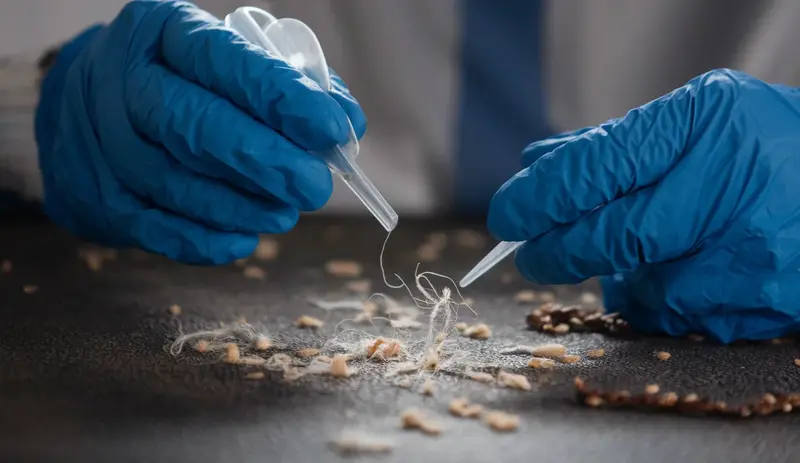
We document everything, test for contamination spread, and set up containment barriers. This isn’t rushing in with bleach and paper towels proper biohazard cleanup requires planning.
Hours 2-4: Primary Decontamination
This is where we remove all visible contamination, affected materials, and begin deep cleaning of surfaces. Any porous materials that can’t be properly decontaminated get removed completely.
Hours 5-6: Deep Cleaning and Treatment
We treat all surfaces with antimicrobial solutions, address any HVAC contamination, and ensure complete decontamination of the affected area.
Final Hours: Verification and Restoration
Final testing, odor elimination, and any necessary minor restoration work to return the space to a safe, usable condition.
Why You Shouldn’t Rush Crime Scene Cleanup
I get calls from people asking if we can “just do a quick cleanup” to save time and money. Here’s my honest answer: if you want it done fast and cheap, we’re not the right choice for you. Proper crime scene cleanup can’t be rushed without compromising safety and thoroughness.
Bloodborne pathogens like Hepatitis B can survive on surfaces for up to a week. Hepatitis C can last up to four days, and HIV can remain viable for several days under the right conditions. Cutting corners on decontamination time means potentially exposing future occupants to serious health risks.
We’re Level A Hazmat certified and blood-borne pathogen trained precisely because this work requires following specific protocols that take time. The families and property owners who call us deserve to know that when we leave, the space is genuinely safe.
Factors That Can Speed Up the Process
There are a few things that can help us work more efficiently:
Early contact: The sooner you call us after law enforcement releases the scene, the better. Fresh contamination is always easier to clean than something that’s been sitting for days.
Clear access: If we can get our equipment close to the affected area without navigating stairs or tight spaces, that saves time on setup and material removal.
No attempted DIY cleanup: When people try to clean up themselves first, it usually creates more work for us and extends the timeline.
Weather also matters. We can work in most conditions, but extreme weather can slow down our process, especially for scenes that require outdoor work or affect our ability to properly ventilate the area.
Multi-Day Cleanups: When They’re Necessary
Some scenes just can’t be completed in a single day, no matter how large our crew or how many hours we work. This typically happens with:
Large commercial properties where we need to maintain business operations in unaffected areas. We’ll work in sections to minimize disruption while ensuring thorough decontamination.
Scenes with significant structural damage where we need to coordinate with other contractors for repairs. We handle the biohazard cleanup, but if there’s drywall removal, flooring replacement, or major restoration work needed, that extends the timeline.
Situations where contamination has spread through multiple rooms or floors. Each area needs to be properly contained and cleaned before we can move to the next section.
Working with Insurance and Timeline Expectations
Most insurance companies understand that proper biohazard cleanup takes time. They’d rather pay for a thorough job done right the first time than deal with ongoing health issues or incomplete decontamination.
We work directly with insurance adjusters throughout North Carolina and South Carolina to provide realistic timelines upfront. No one benefits from overly optimistic estimates that lead to delays and complications.
Frequently Asked Questions
Can you give me an exact timeline over the phone?
Not honestly. I can give you general ranges based on what you describe, but every scene is unique. We need to see the actual contamination spread, affected materials, and access conditions to provide an accurate timeline.
Do you work nights and weekends to speed up the process?
Yes, we offer emergency response services and can work around your schedule when needed. Sometimes working overnight or on weekends actually helps us complete the job faster because there are fewer distractions and interruptions.
What if the scene needs to be processed by law enforcement first?
We can’t begin cleanup until law enforcement releases the scene. This can add anywhere from a few hours to several days to your overall timeline, depending on the investigation requirements. We stay in contact with the investigating officers to begin work as soon as possible.
How do you handle odor issues that might take longer to resolve?
Odor elimination is included in our standard timeline, but severe cases might require additional treatment cycles. We use professional-grade ozone treatment and other methods that are much more effective than anything available to the general public.
Can I stay in my home during the cleanup process?
Usually not in the immediate affected areas, but we can often arrange for you to access uncontaminated parts of your property. We’ll discuss the specifics during our initial assessment and work with you to minimize displacement time.
When you’re dealing with a traumatic situation, you need straight answers about timing and realistic expectations about the cleanup process. We’ve been helping families and property owners across the Charlotte region for decades, and we understand that every day counts when you’re trying to get your life back to normal.
If you’re facing a situation that requires professional biohazard cleanup, don’t wait. The sooner we can assess the scene, the more accurate timeline we can provide. Call Crime Scene Services Inc. at (704) 221-5329 for immediate response and honest answers about your cleanup timeline.