Once investigators finish processing a scene and release the property, the cleanup becomes your responsibility. Most people don’t realize law enforcement doesn’t clean up biological material — that’s on the property owner or family. Understanding what the cleanup process actually involves helps you prepare for what comes next and why calling trained professionals makes sense.
What Happens During Crime Scene Cleanup
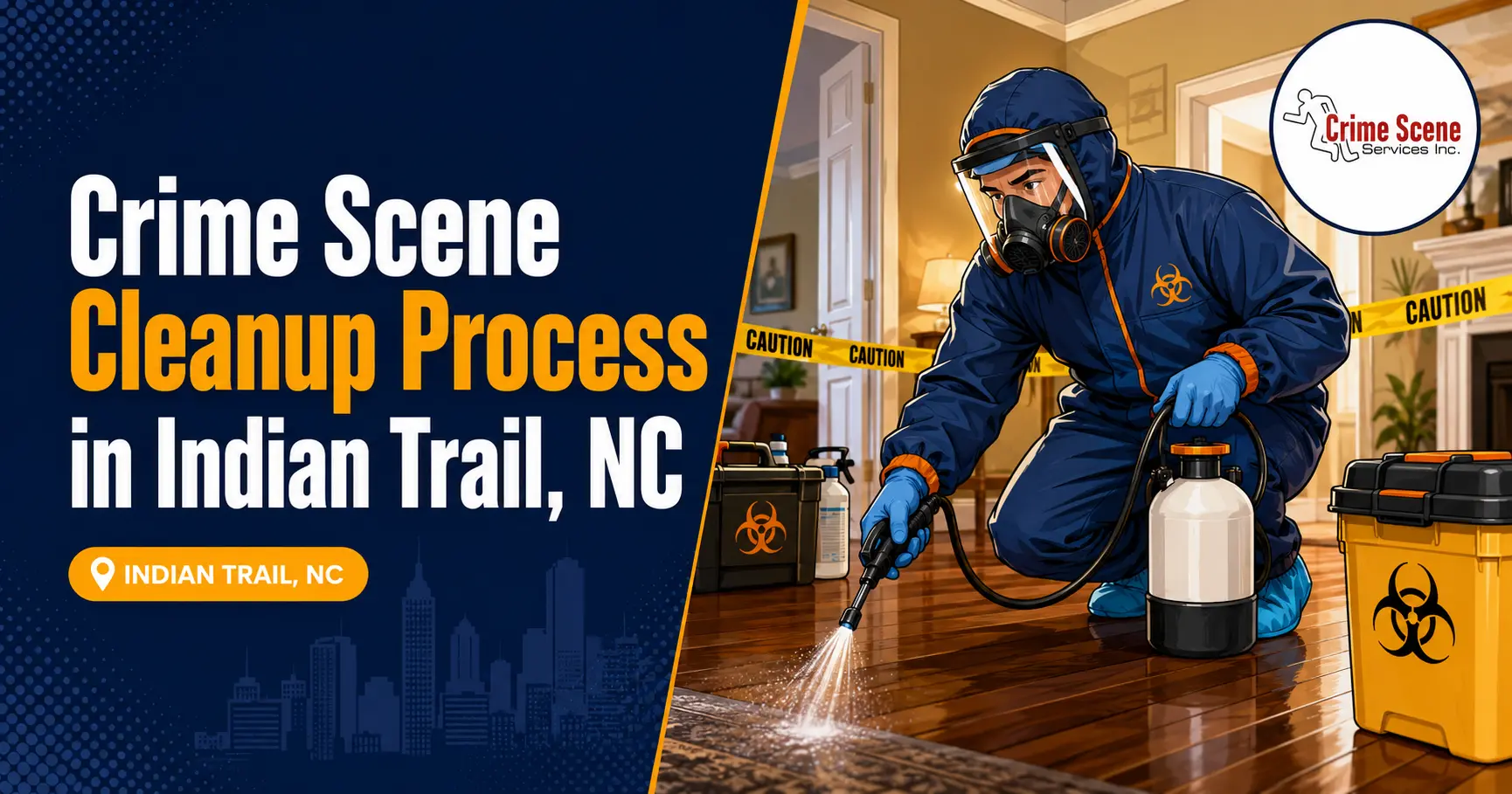
Professional crime scene cleaning follows a strict protocol to safely remove blood, bodily fluids, and contaminated materials while restoring the property to a habitable state.
Initial Assessment and Containment
We arrive in unmarked vehicles within hours of your call. First step is assessing the contaminated area — size, materials affected, structural damage. We seal off the area with physical barriers and negative air machines to prevent airborne pathogens from spreading to clean areas.
Removal of Biohazard Materials
Anything porous that absorbed blood or fluids gets removed completely — carpet, padding, drywall, insulation, sometimes subflooring. We’re Level A hazmat certified, which means full-body suits, respirators, and eye protection. All contaminated materials go into red biohazard bags, sealed, and transported to medical waste incinerators.
Deep Cleaning and Disinfection
After removal, we scrub remaining surfaces with hospital-grade disinfectants and enzyme cleaners that break down proteins in blood. Hard surfaces like concrete or tile get treated multiple times. We also treat areas you can’t see — blood seeps into cracks, travels along grout lines, pools under baseboards.
Odor Removal and Air Purification
Decomposition and blood create odors standard cleaning can’t touch. We use hydroxyl generators or ozone machines depending on the situation. HEPA filtration runs continuously during the entire process.
Final Inspection and Restoration
We verify every surface tests clean using ATP testing — the same method hospitals use. Once cleared, we help coordinate with restoration contractors if you need drywall, flooring, or painting to return the space to normal.
How Long Does Crime Scene Cleanup Take?
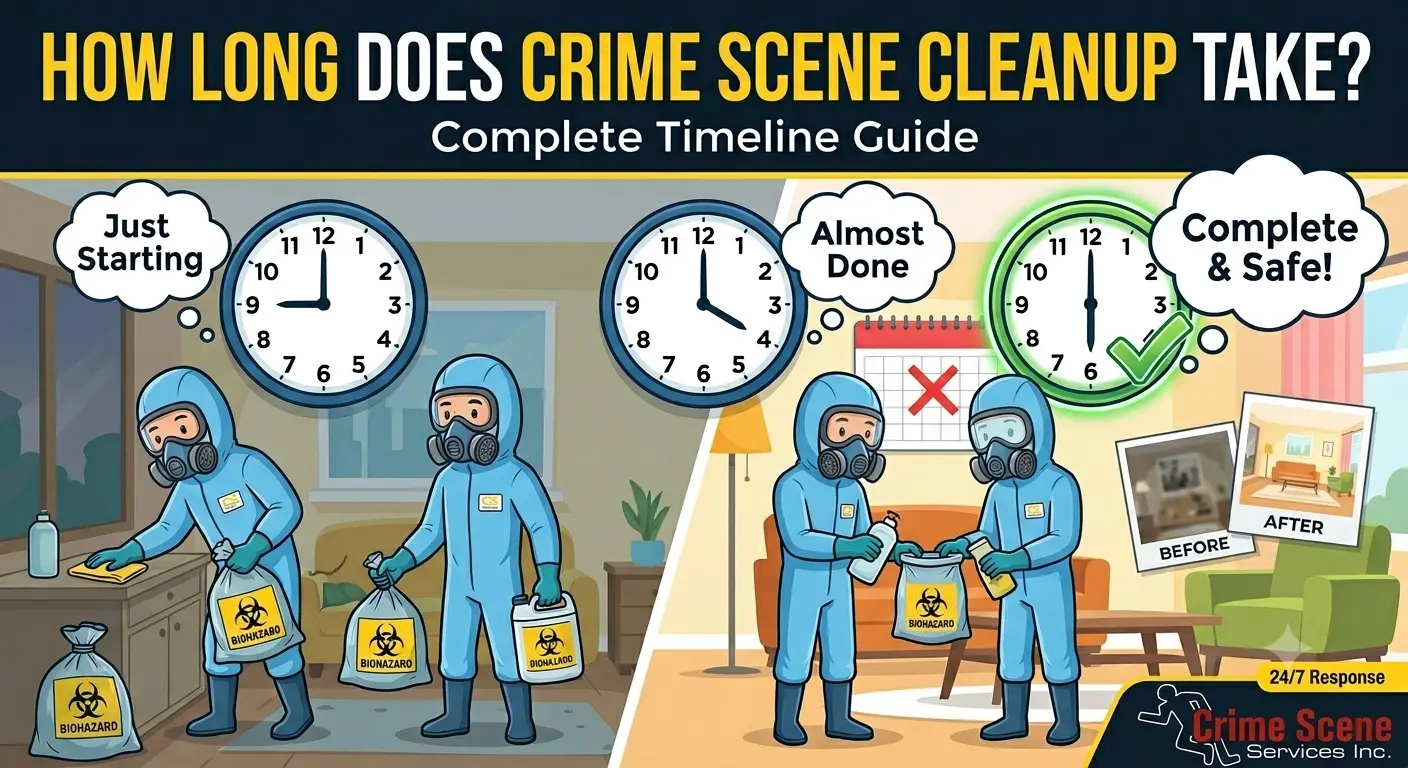
Most residential scenes take 4-8 hours for a single room. Larger areas, severe decomposition, or structural contamination can take 2-3 days. We don’t rush — cutting corners in biohazard work creates serious health risks.
Who Pays for Crime Scene Cleanup?
Property owners are legally responsible for cleanup costs. Homeowners insurance often covers it under dwelling or personal property coverage — we work directly with insurance companies and provide detailed documentation for claims. If you’re unsure about your coverage, check our guide on whether insurance covers crime scene cleanup before proceeding.
When to Call a Professional vs. Handle It Yourself
Small, contained incidents like minor cuts might be manageable with proper PPE and disinfectant. Don’t attempt cleanup yourself if:
- Blood or fluids cover more than a few square feet
- Material soaked into carpet, furniture, or porous surfaces
- Any decomposition is present
- You’re emotionally connected to the person involved
- The scene involves communicable disease risk
Blood-borne pathogens like HIV, Hepatitis B, and Hepatitis C survive outside the body for days or weeks. Without proper training and equipment, you’re risking infection and legal liability. We also handle situations like vehicle biohazard cleanup where contamination happens in tight, hard-to-reach spaces.
Frequently Asked Questions
Do police clean up after a crime scene?
No. Law enforcement collects evidence and releases the scene, but cleanup is the property owner’s responsibility. They don’t remove blood, tissue, or contaminated materials.
How much does crime scene cleanup cost?
Most residential cleanups run $1,500-$5,000 depending on scene size and severity. Insurance typically covers the majority. We provide free estimates and work directly with your insurance company.
Can family members be present during cleanup?
We don’t recommend it for emotional reasons, but some families want to be nearby. You cannot enter the contaminated area without proper PPE — it’s a safety issue, not a preference.
What happens to items that can’t be cleaned?
Anything porous that absorbed biohazard material must be disposed of as medical waste. We document everything for insurance claims. Some personal items like photos or jewelry can sometimes be decontaminated if they’re non-porous.
How do I know the area is really safe after cleanup?
We conduct ATP testing to verify surfaces are free of biological contamination. You receive documentation of the cleaning process and test results.
Need Crime Scene Cleanup in Indian Trail?
Crime Scene Services Inc. responds to calls across North and South Carolina within hours. We handle everything from initial assessment through final restoration, working with your insurance company and treating your property with the discretion and respect it deserves.
Call (704) 221-5329 anytime, day or night, or visit Crime Scene Services Inc. to speak with our team immediately.