If biological contamination occurs in an apartment building, property owners and managers must determine who is responsible for arranging professional cleanup. Whether the situation involves an unattended death, crime scene, or another biohazard incident, the response depends on where the contamination occurred, its cause, the lease agreement, and applicable state and local requirements.
Understanding apartment biohazard cleanup responsibilities can help property managers protect residents, coordinate remediation, document the incident, and address potential insurance claims. Here’s what determines who arranges cleanup, who may be financially responsible, and what steps to take when contamination is discovered.
Who Is Responsible for Apartment Biohazard Cleanup?
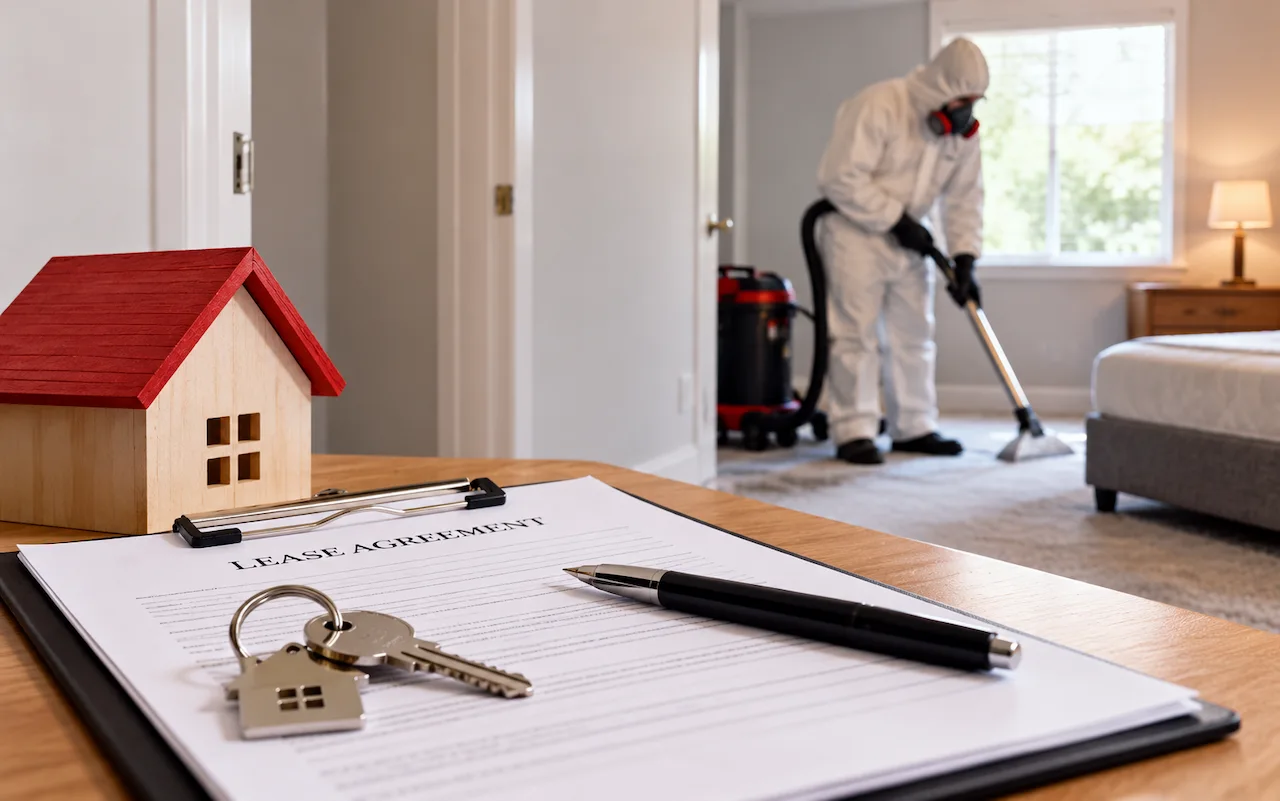
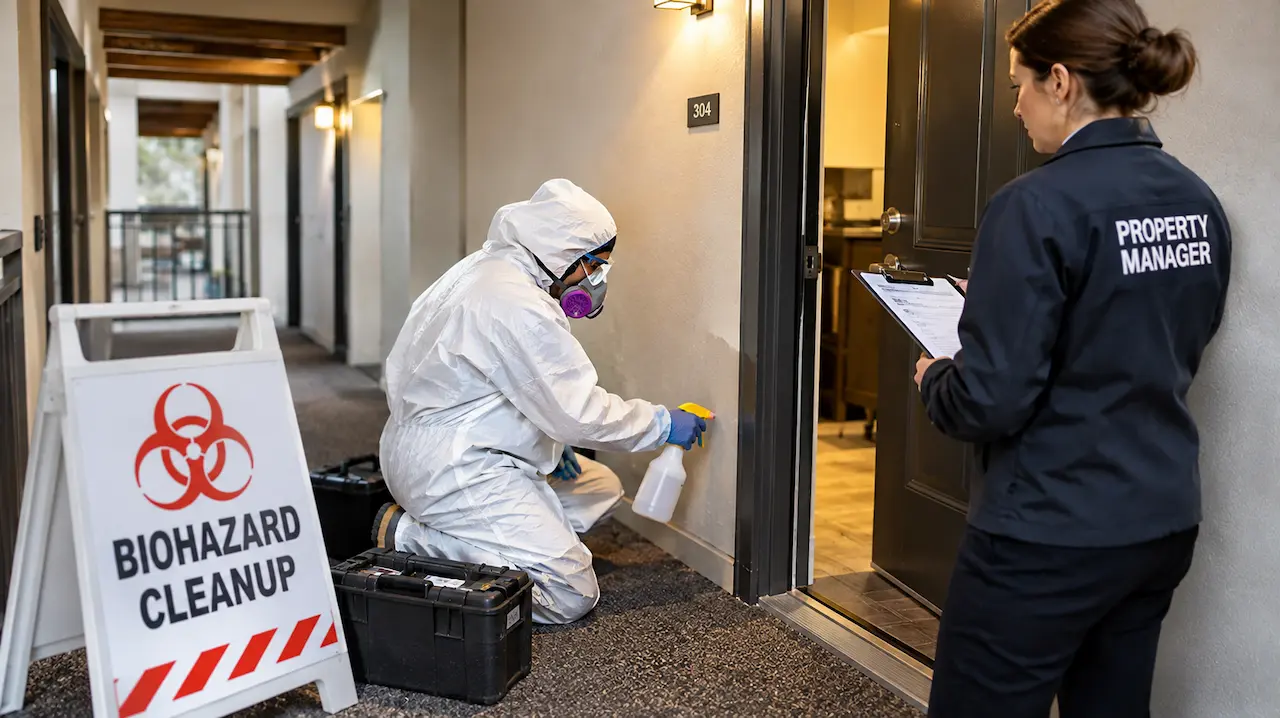
Responsibility for apartment biohazard cleanup depends on the circumstances surrounding the contamination. Property owners and managers generally control maintenance of common areas, while responsibility for damage inside an individual unit may depend on the tenant’s lease, the cause of contamination, and applicable landlord-tenant laws. Before assigning financial responsibility, property managers should review the incident, relevant agreements, and insurance coverage. In practice, most apartment leases include clauses that make tenants responsible for damage caused by their actions or negligence including biohazard contamination that originates in their unit. But enforcement is complicated when the tenant has passed away or disappeared.
| Location of Contamination | Responsibility to Assess | Important Considerations |
| Inside a leased unit | Tenant, estate, or property owner, depending on circumstances | Review the lease, cause of contamination, and applicable law. |
| Common areas | Property owner or management company | Owners generally oversee maintenance and safety of shared spaces. |
| Vacant unit between tenants | Property owner or authorized manager | Confirm ownership and responsibility for arranging remediation. |
| Multiple affected units | Property owner or responsible building operator | Investigate whether the contamination originated from a shared building system or another source. |
The location of contamination is only one factor in determining responsibility. A tenant’s estate is not automatically liable simply because an incident occurred inside a leased unit. Property managers should document the circumstances, review the applicable lease, and obtain legal advice when responsibility is disputed.
This distinction matters because landlord-tenant responsibilities can differ by state. North Carolina law, for example, addresses tenant responsibility for certain property damage while also establishing separate landlord maintenance obligations.
Why Professional Biohazard Cleanup Is Necessary
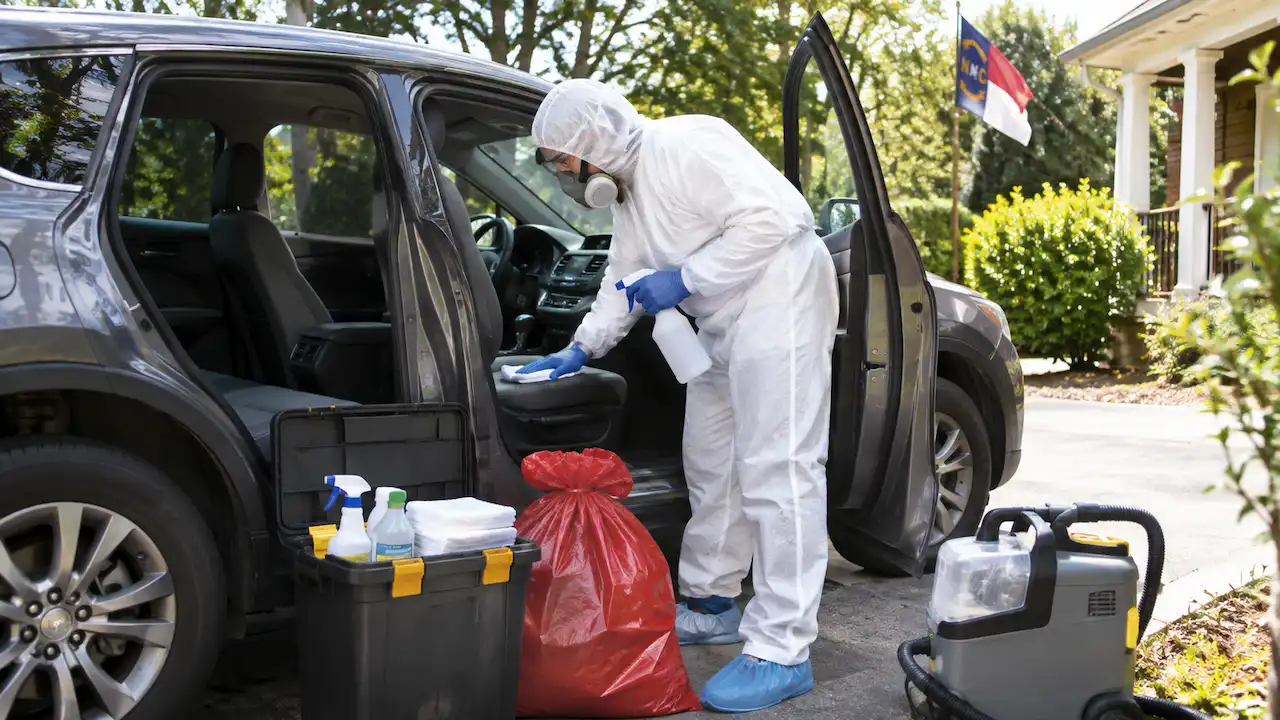
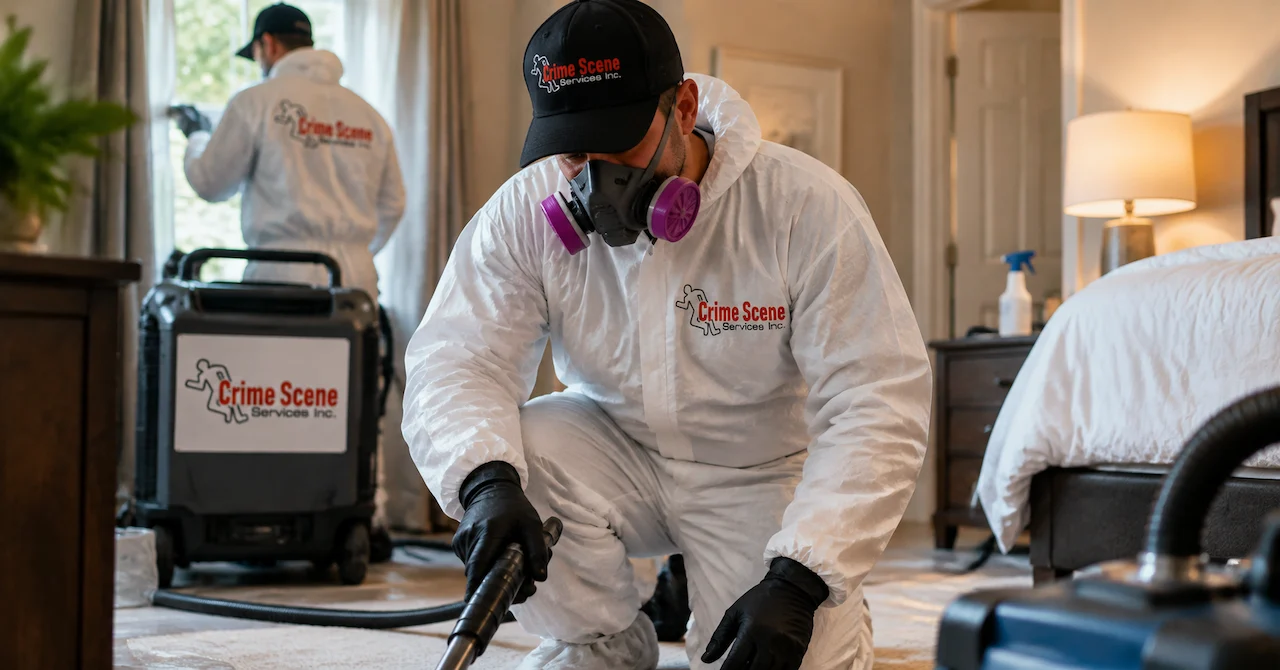
Not every cleaning task requires specialized biohazard remediation, but visible blood and other potentially infectious materials require appropriate precautions. Routine janitorial cleaning may not include the exposure-control training, protective equipment, containment procedures, and waste-handling protocols needed for these situations.
Blood can carry pathogens such as hepatitis B, hepatitis C, and HIV. The risk and environmental survival differ by pathogen and conditions, so it is inaccurate to suggest that all three survive for the same length of time on surfaces.
OSHA’s Bloodborne Pathogens Standard (29 CFR 1910.1030) addresses occupational exposure through requirements covering protective equipment, employee training, housekeeping, and exposure-control procedures.
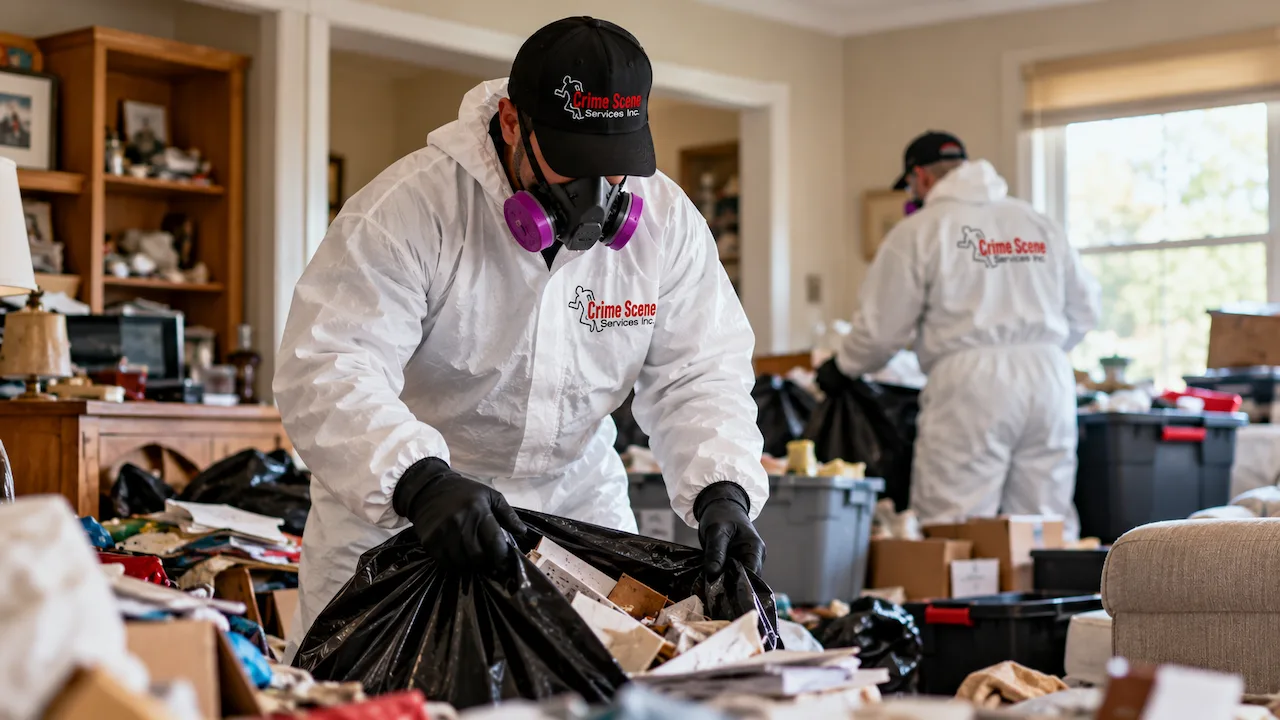
Property managers should arrange appropriately trained remediation professionals rather than asking untrained maintenance personnel to handle potentially infectious contamination. Learn more about our crime scene cleaning services.
What Property Managers Should Do Immediately
When you discover biological contamination in your building, here’s the protocol:
- Restrict access to the affected unit or common area.
- Contact a qualified biohazard remediation company for an assessment.
- Document visible damage and the incident details when it is safe and appropriate to do so.
- Notify the insurance carrier and follow its documentation and reporting requirements.
- Keep untrained residents, maintenance personnel, and other unauthorized individuals away from the affected area until it has been assessed and appropriately released for use.
If the contamination affects multiple units or common areas, you may also need to notify tenants in writing. We use unmarked vehicles and work discreetly, but residents have a right to know if their building has been exposed to biohazards.
When Tenants or Estates Are Responsible
If contamination originated in a leased unit due to tenant activity or negligence, the lease typically assigns financial responsibility to the tenant or their estate. That doesn’t mean you wait around for payment while biohazards sit in your building.
As the property owner or manager, you can authorize cleanup immediately and bill the responsible party afterward. In cases involving a death, the estate is usually liable though collecting can take months. Many of our clients handle this through insurance claims or write it off as a loss if the estate has no assets.
If you’re a family member or estate executor dealing with this situation, most biohazard cleanup services work directly with insurance companies to streamline payment and documentation.
Frequently Asked Questions
Does renters insurance cover biohazard cleanup?
Renters insurance may cover certain losses associated with a covered incident, but biohazard remediation is not automatically included. Coverage depends on the policy, the cause of contamination, applicable exclusions, and the insurer’s assessment. Tenants, family representatives, or property managers should review the policy and contact the insurance provider before assuming cleanup costs will be reimbursed.
How long does biohazard cleanup take in an apartment?
Most apartment unit cleanups take between four and twelve hours depending on the extent of contamination, materials affected, and whether structural removal is needed. Common area cleanups are usually faster. We provide a time estimate after the initial assessment.
Can other tenants stay in the building during cleanup?
Yes, as long as contamination is contained to a specific unit or area and we’ve secured access. We use containment barriers, negative air pressure when needed, and work discreetly. Tenants in unaffected units can remain safely.
What happens to contaminated furniture and belongings?
Items that can’t be safely decontaminated mattresses, upholstered furniture, porous materials saturated with biohazards are removed and disposed of as regulated medical waste. Hard surfaces and some belongings can often be decontaminated and returned. We document everything for insurance purposes.
Ready to Arrange Professional Apartment Biohazard Cleanup?
Managing biohazard contamination in an apartment building requires careful coordination, appropriate safety precautions, and professional remediation.
Crime Scene Services Inc. provides professional cleanup and decontamination services for affected properties across North and South Carolina. From initial assessments to detailed remediation and disposal, our team helps property owners and managers address challenging cleanup situations with discretion and care.
Whether you’re managing contamination inside a rental unit or dealing with an affected common area, contact our team to discuss your situation and arrange professional assistance.
Call (704) 221-5329 or visit Crime Scene Services Inc. to request assistance.